
December. For most restaurant owners, it’s a whirlwind of holiday parties, overflowing reservations, and the glorious sound of the POS system humming. Sales are up, the team is busy, and visions of profit margins dance in your head.
But here’s a crucial truth many owners overlook: your impressive December sales could be hiding a serious financial problem. The culprit? Your year-end inventory count.
An inaccurate inventory count at year-end is a silent profit killer. It can artificially inflate your taxable income, leaving you paying taxes on money you didn’t truly make, and it sets the stage for inaccurate financial reporting in the New Year.
Let’s dive into why this often-dreaded task is absolutely critical right now.
The Tax Consequence of Bad Inventory: Are You Paying on “Phantom Profit”?
Your Cost of Goods Sold (COGS) is arguably the most vital number on your restaurant’s Profit & Loss (P&L) statement. It’s how much you spent on the ingredients and supplies that went into the food and drinks you sold.
Your COGS is calculated like this:
Beginning Inventory + Purchases – Ending Inventory = COGS
See that “Ending Inventory” there? That’s your December 31st count. If that number is wrong, your COGS is wrong, and your profit is wrong. And when your profit is wrong, your taxes are wrong.
Here’s how it typically goes wrong:
- Scenario 1: Your Year-End Inventory is Overstated (Too High)
- If you count more inventory than you actually have, your “Ending Inventory” number becomes artificially high.
- This makes your COGS appear lower than it actually is.
- A lower COGS makes your Gross Profit look higher, and consequently, your taxable net income appears inflated.
- The Result: You could end up paying hundreds, even thousands, in taxes on “phantom profit” – money that simply doesn’t exist. This is money that comes directly out of your actual cash flow.
- Scenario 2: Your Year-End Inventory is Understated (Too Low)
- If you count less inventory than you actually have, your “Ending Inventory” number is artificially low.
- This makes your COGS appear higher than it truly is.
- While a higher COGS might reduce your taxable income for this year (which seems good, right?), it creates a huge problem for next year. Your beginning inventory for January 1st, 2026 will be wrong, leading to inaccurate COGS and profit figures for your entire next fiscal year. This can lead to bad business decisions.
Key Takeaway for Restaurant Owners: An accurate year-end inventory isn’t just about accounting; it’s about protecting your cash flow and making smart, data-driven decisions for your business.
Your 3-Step Year-End Inventory Count Checklist: Get It Right
Don’t let the pressure of the holidays prevent you from doing this correctly. Here’s a simplified checklist to ensure your year-end count is accurate:
- Nail the “Cutoff Date”:
- Your inventory count should reflect everything physically in your restaurant as of December 31st, 2025.
- Crucially, ensure that all invoices for items counted have been received and recorded on or before December 31st. Any inventory counted but not yet billed for that period will throw off your numbers. Similarly, don’t count inventory received after Dec 31st as part of your 2025 year-end.
- Pro Tip: Stop accepting deliveries a day before the count if possible, or mark them clearly as “2026 Inventory.”
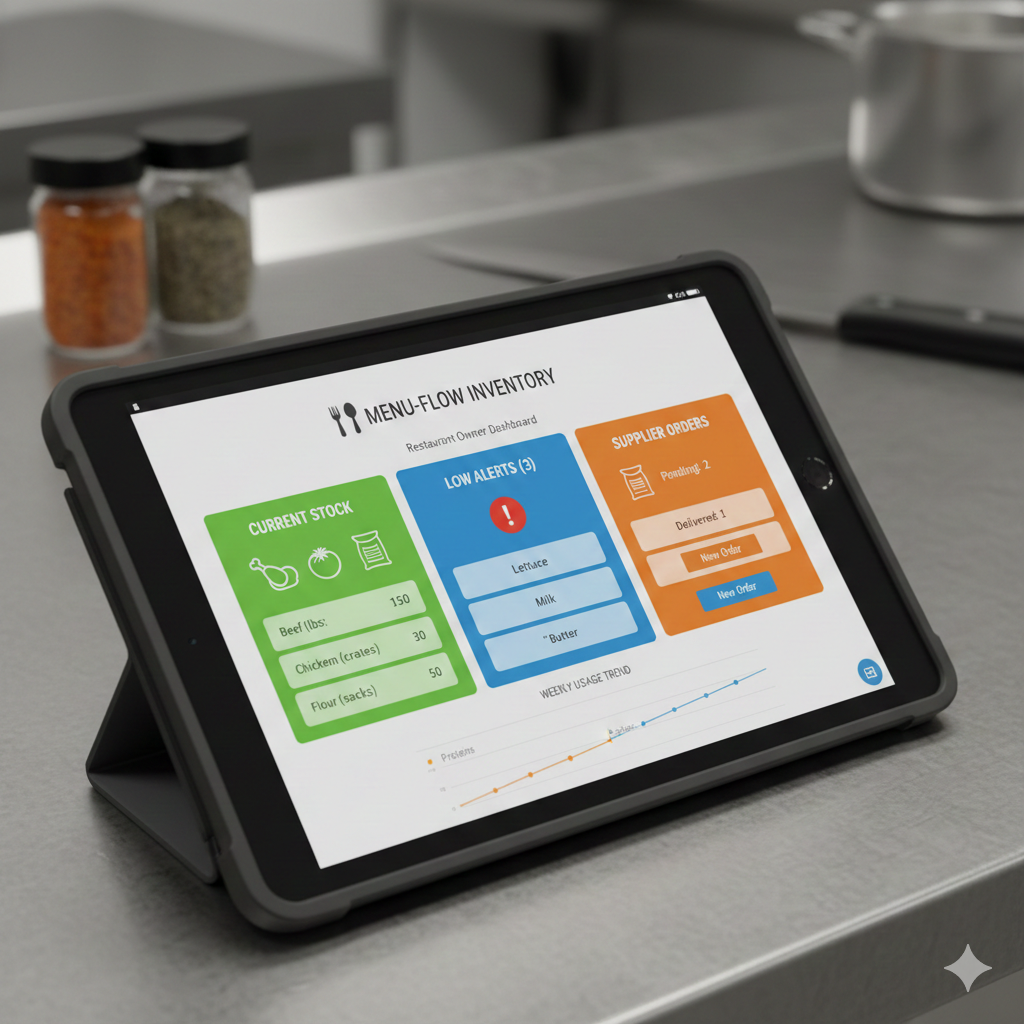
2. Conduct a Thorough Physical Count:
- This is the tedious part, but it’s where accuracy lives. Have two people count together: one counting, one recording. This drastically reduces errors.
- Count EVERYTHING: Food, liquor, beer, wine, paper goods, cleaning supplies – anything you have on hand that will be used in the future.
- Organize First: A well-organized, clean storeroom makes counting infinitely faster and more accurate.
- Use Consistent Units: If you buy chicken by the case but count by the pound or piece, make sure your conversion is exact.
3. Ensure Consistent Valuation:
- While you don’t need to be an accountant, understand that you need to use a consistent method to value your inventory (e.g., FIFO – First-In, First-Out, or Weighted Average).
- The key is consistency. Stick to one method year after year for accurate comparisons. Don’t just pull numbers out of thin air.
Don’t DIY Your Way to a Tax Nightmare: We Can Help
You’ve worked tirelessly all year. Your December sales prove your hard work. Don’t let a faulty inventory count undermine your financial success, force you to overpay taxes, or leave you scrambling with messy books in 2026.
If reading this made you realize your inventory, payroll, or overall bookkeeping records might be a “mess” and you’re feeling overwhelmed, you’re not alone. The year-end is busy enough without tackling complex accounting challenges.
That’s precisely why we offer our Year-End Clean Up Call. Let us help you organize your books, reconcile your inventory, and ensure your financial records are pristine for tax season. Protect your profit and start 2026 with confidence.
Ready to ensure your year-end books are 100% accurate?