Review and Analyze Financial Statements
Your first step in year-end preparation should always be a careful review of your restaurant’s financial statements. While many owners focus solely on net profit, a deeper understanding of each statement provides actionable insights that can improve performance.
Profit and Loss Statement (P&L)
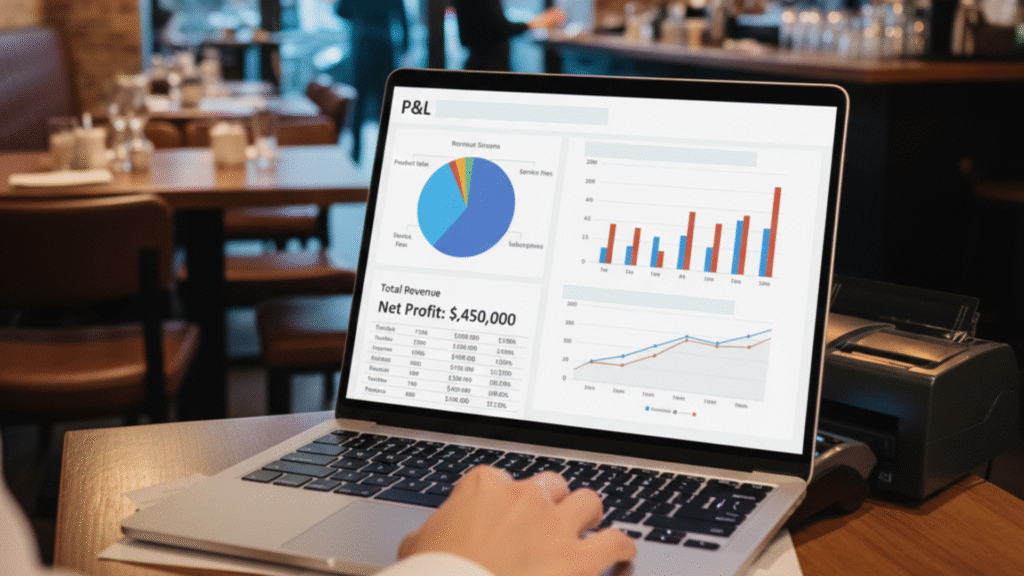
The P&L statement summarizes revenue, costs, and expenses over a specific period. Beyond looking at the bottom line, owners should break down revenue by stream—dine-in, takeout, catering, and bar sales—to see which areas are performing best and which may require attention. Compare these figures to previous months and years to identify trends, seasonal fluctuations, or areas of underperformance.
Actionable Tips:
- Identify menu items that are high-cost but low-revenue. Consider adjusting prices, portion sizes, or removing them.
- Monitor marketing-related sales and promotions to determine ROI.
- Track recurring expenses to spot opportunities to renegotiate contracts or reduce overhead.
Balance Sheet
The balance sheet provides a snapshot of your restaurant’s financial position at a given time, listing assets, liabilities, and equity. It highlights liquidity, showing whether the business can meet short-term obligations.
Actionable Tips:
- Compare current assets (cash, receivables, inventory) to current liabilities to ensure liquidity. A ratio below 1 signals potential cash flow issues.
- Review long-term liabilities, such as loans or leases, to anticipate repayment schedules for the coming year.
Cash Flow Statement
Cash flow statements track the actual movement of money, providing a clear picture of whether cash inflows can cover cash outflows. Even profitable restaurants can face challenges if cash isn’t managed effectively.
Actionable Tips:
- Track all inflows: POS sales, delivery revenue, catering payments, and cash tips.
- Track all outflows: payroll, supplier payments, rent, utilities, and other overhead.
- Create weekly or monthly cash flow forecasts to anticipate potential shortages and plan accordingly.
Conduct a Detailed Inventory Audit
Inventory is one of the largest controllable costs in a restaurant. A year-end audit ensures accuracy in your financial reporting and can reveal opportunities to reduce waste and shrinkage.
Actionable Steps:
- Conduct a physical count of all food, beverages, and perishable items.
- Identify slow-moving items or excess stock that may need to be discounted or repurposed.
- Implement portion controls and standardized recipes to minimize waste.
- Consider using inventory management software that integrates with your POS system to track usage trends.
Proper inventory management directly impacts your Cost of Goods Sold (COGS). Failing to account for spoilage, waste, or theft can inflate your profit margins artificially and lead to surprises during tax season.
Optimize Labor and Staffing Costs
Labor is typically the second-largest expense for restaurants after food. Managing staff efficiently while maintaining quality service is essential for profitability.
Strategies to Control Labor Costs:
- Schedule staff according to peak hours and sales forecasts. Avoid overstaffing during slow periods.
- Cross-train employees to handle multiple roles, improving flexibility and efficiency.
- Track labor-related KPIs, such as sales per labor hour or table turnover per server, to identify inefficiencies.
- Reduce turnover by fostering employee satisfaction through incentives, recognition, and training opportunities.
By aligning staffing with demand and tracking productivity metrics, restaurants can significantly reduce labor costs without sacrificing service quality.
Reconcile Accounts and Track Transactions
Reconciling accounts is critical to ensuring every dollar is accounted for. Discrepancies can lead to lost revenue, errors in reporting, and increased tax liabilities.
Steps to Reconcile:
- Compare POS records with bank deposits, credit card statements, and delivery app reports.
- Verify supplier invoices and ensure outstanding bills match payments made.
- Track tips, discounts, and refunds accurately to prevent revenue leakage.
Pro Tip: Automating reconciliations using accounting software reduces errors and frees up time to focus on strategic financial decisions.

Prepare for Year-End Taxes
Restaurants face complex tax requirements, including payroll taxes, sales taxes, property taxes, and potential deductions for operating expenses.
Actionable Steps for Tax Readiness:
- Organize all receipts, invoices, and bank statements by category.
- Track deductible expenses, such as food and beverage purchases, labor, rent, utilities, marketing, and equipment.
- Ensure payroll and tip reporting is accurate.
- Engage a restaurant-focused accountant to maximize deductions and ensure compliance with tax laws.
Proactive tax preparation reduces the risk of penalties and can even result in substantial savings.
Plan for 2026
Year-end is also the ideal time to set goals and plan for the new year. Use insights from financial statements, inventory audits, and labor analysis to create a realistic budget and forecast.
Planning Tips:
- Set clear financial objectives for revenue, profit, and expenses.
- Develop KPIs to track ongoing performance. Examples include food cost percentage, labor cost percentage, table turnover, and cash flow metrics.
- Adjust staffing, inventory, and marketing plans based on anticipated changes in demand.
Planning ahead allows you to navigate seasonal fluctuations, industry trends, and unexpected challenges without compromising your financial health.
Conclusion
Closing out the year is more than a bookkeeping exercise—it’s a strategic opportunity to strengthen your restaurant’s financial position. By carefully reviewing financial statements, auditing inventory, optimizing labor, reconciling accounts, preparing for taxes, and planning ahead, restaurant owners can gain clarity, control, and confidence. Taking these steps ensures that your business is not just surviving but thriving as it enters 2026.